Fashion for middle-aged men in the UK isn’t about chasing youth or following every trend. It’s about building a wardrobe that reflects personal style, offers comfort, and projects quiet confidence through well-chosen pieces that suit one’s lifestyle. The key lies in understanding what works at this stage of life and making smart choices that balance timeless appeal with modern sensibility.
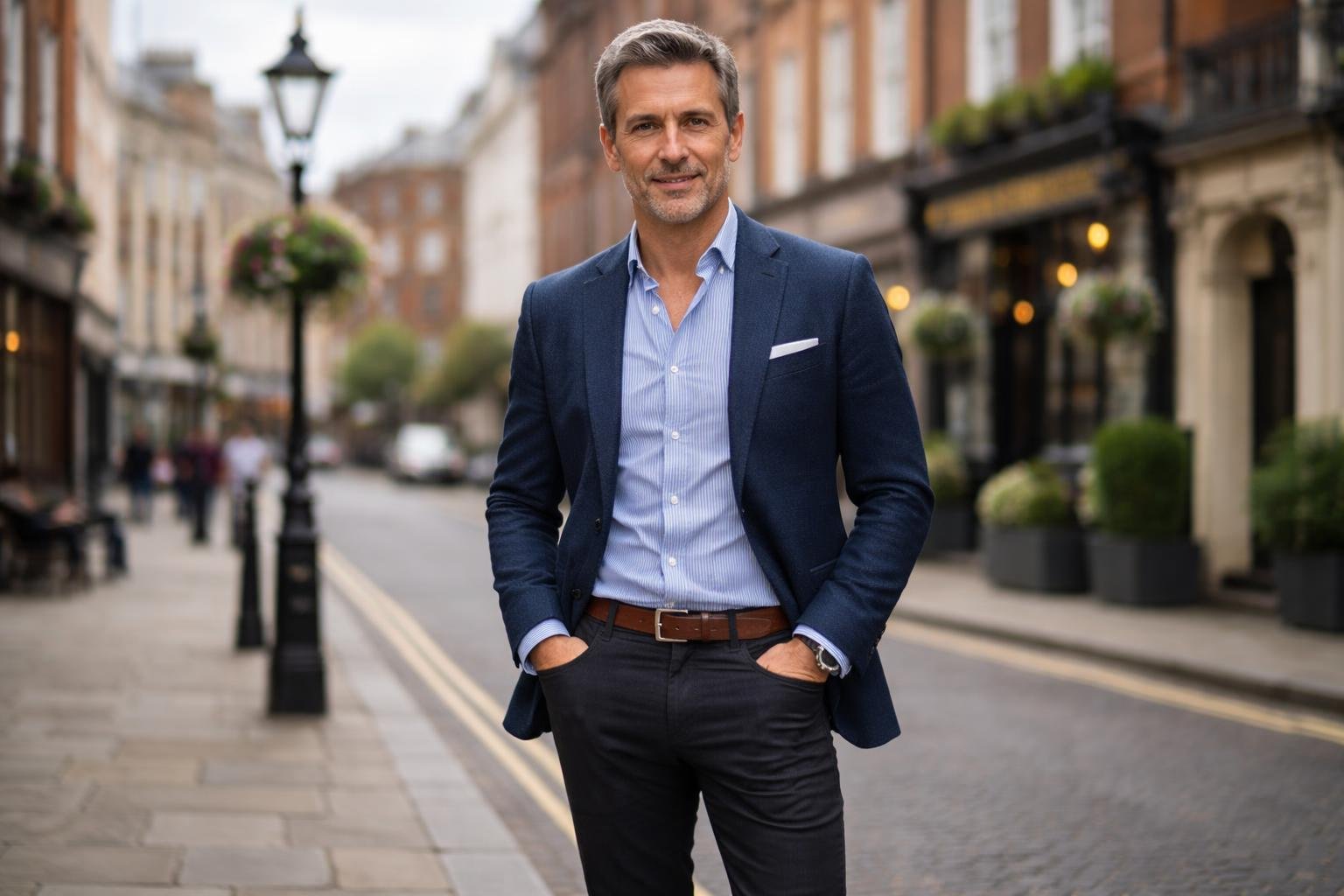
Getting dressed shouldn’t feel like a puzzle. Middle-aged men benefit from knowing which wardrobe foundations serve them best, how to adapt their style for different settings, and which investments truly pay off. The right approach combines practical advice with an honest look at what flatters and what simply works in day-to-day life.
This guide walks through the fundamentals of dressing well in middle age. From establishing core style principles to selecting versatile pieces, choosing appropriate footwear, and maintaining a polished appearance across different occasions, these insights help create a wardrobe that feels both effortless and intentional.
Essential Style Principles for Middle Aged Men
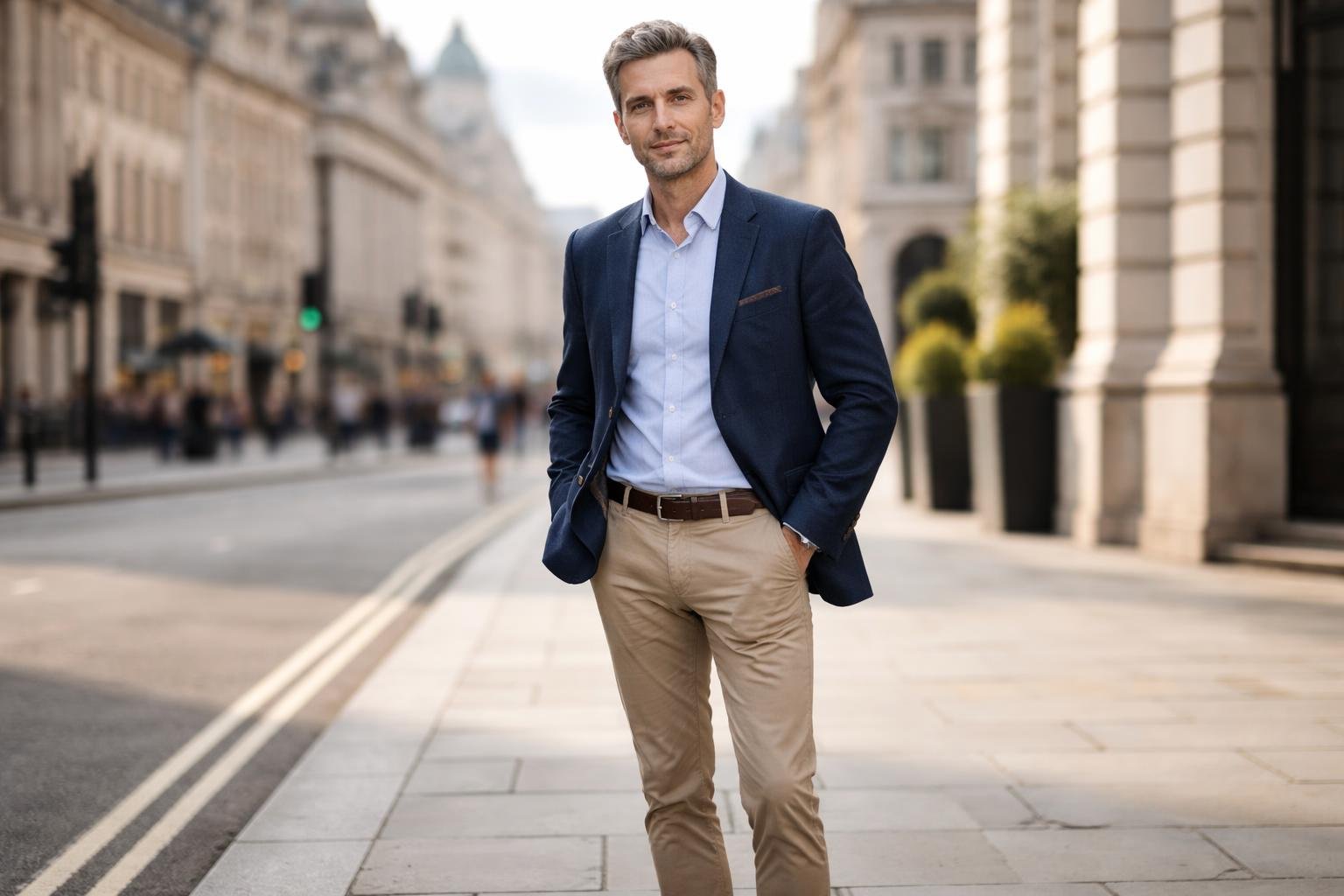
Looking good in middle age requires understanding a few key principles that work regardless of personal style preferences. The right fit transforms ordinary pieces into polished looks, whilst combining classic items with modern touches keeps wardrobes relevant without appearing dated.
Importance of Fit and Tailoring
Clothes that fit properly make the biggest difference to any outfit. As body shapes change over time, men need to adjust their sizing choices rather than sticking to what worked in their 30s.
Taking multiple sizes into the fitting room helps identify the best option. A shirt might need sizing up for comfort across the chest, even if that means sleeves require shortening. Trousers that fit at the waist but look baggy elsewhere can be taken in at the back seam.
Common alterations include:
- Shortening sleeves on shirts and jackets
- Taking in waist seams on trousers
- Adjusting trouser length
- Tapering shirt sides for a better fit
Setting aside part of the clothing budget for tailoring makes sense. Even casual items like overshirts and chinos benefit from proper alterations. Men should always sit down when trying on shirts to check buttons don’t pull across the stomach, and trousers remain comfortable.
Balancing Classic and Modern Looks
Mixing formal and casual pieces creates outfits that feel current without looking like someone’s trying too hard. When everything skews too formal, the result looks dated. When everything’s too casual, it appears juvenile.
Dark jeans paired with an unstructured blazer works better than extremely ripped denim with a stiff double-breasted jacket. Smart trainers in neutral leather suit tailored trousers more than bright sports trainers do. A denim shirt under a flannel trouser looks modern, as does a fine-knit jumper replacing a shirt under a blazer.
Updating one element at a time prevents outfits from feeling costume-like. A man might swap his usual blue jeans for ecru ones in the same cut, or try a jacquard overshirt instead of his standard check. This approach to classic menswear keeps wardrobes fresh without requiring complete overhauls.
Smart Colour and Pattern Choices
The right colours near the face help smooth out shadows and draw attention to eyes. Navy offers a softer alternative to black for fashion for men over 50, working better with other colours and creating less harsh contrast.
Even men who prefer neutral wardrobes can add colour through accessories. Coloured socks, pocket squares, or scarves lift outfits without feeling overwhelming. When combining colours, toning works better than exact matching—using lighter or darker shades of the same colour looks more natural.
A pink Shetland jumper with beige chinos creates interest whilst remaining wearable. Dark brown serves as a contemporary alternative to black. Pattern choices follow similar logic: trying a more adventurous jacquard in a familiar shirt style feels less risky than changing multiple elements simultaneously.
Building a Versatile Wardrobe
A versatile wardrobe relies on carefully selected pieces that work together across different occasions and seasons. The focus should be on quality staples, fabrics that last, and smart combinations that create multiple outfit options from fewer items.
Core Wardrobe Staples
Middle-aged men need foundational pieces that form the backbone of their wardrobe. A crisp white dress shirt works for both formal meetings and casual weekends when paired with different trousers. Navy and charcoal blazers offer flexibility for work events and social gatherings.
Tailored chinos in neutral colours like navy, beige, and grey are essential. They bridge the gap between smart and casual wear effectively.
Dark denim jeans in a straight or slim fit provide a modern look without appearing dated. Choose styles without excessive fading or distressing for a more mature appearance.
A well-fitted suit in navy or charcoal handles formal requirements. Leather shoes in brown and black, including oxfords and loafers, complete the essential footwear collection. These pieces create a foundation that handles most situations a middle-aged man encounters.
Choosing Quality Fabrics
Quality fabrics improve both comfort and longevity. A cashmere sweater offers warmth without bulk and lasts for years with proper care. Merino wool provides breathability and naturally resists odours, making it ideal for both sweaters and suits.
Cotton remains the standard for shirts, but Egyptian or Pima cotton offers better durability and feel. Linen works well for summer months, though it wrinkles easily.
Wool blends in trousers combine structure with comfort. They hold their shape better than pure cotton and resist wrinkles during wear. Leather shoes made from full-grain leather develop character over time rather than deteriorating.
Higher-quality fabrics cost more initially but require fewer replacements. They also look better as they age, unlike cheaper alternatives that show wear quickly.
Mixing and Matching Outfits
Classic menswear principles make mixing pieces straightforward. A navy blazer pairs with grey trousers for meetings, then works with dark jeans for dinner. The same white shirt transitions from suit combinations to casual looks with chinos.
Neutral colours form the base of successful mixing. Navy, grey, beige, and white work together without clashing. Add one accent colour through a jumper or accessories to create interest.
Layer pieces to extend outfit options. A cashmere sweater over a collared shirt adds warmth and style. Remove the blazer from a suit to create a smart-casual look with just the trousers and a different shirt.
Three pairs of trousers, five shirts, two blazers, and three jumpers create numerous combinations. This approach reduces wardrobe size whilst increasing practical options for daily wear.
Key Outfits and Style Ideas
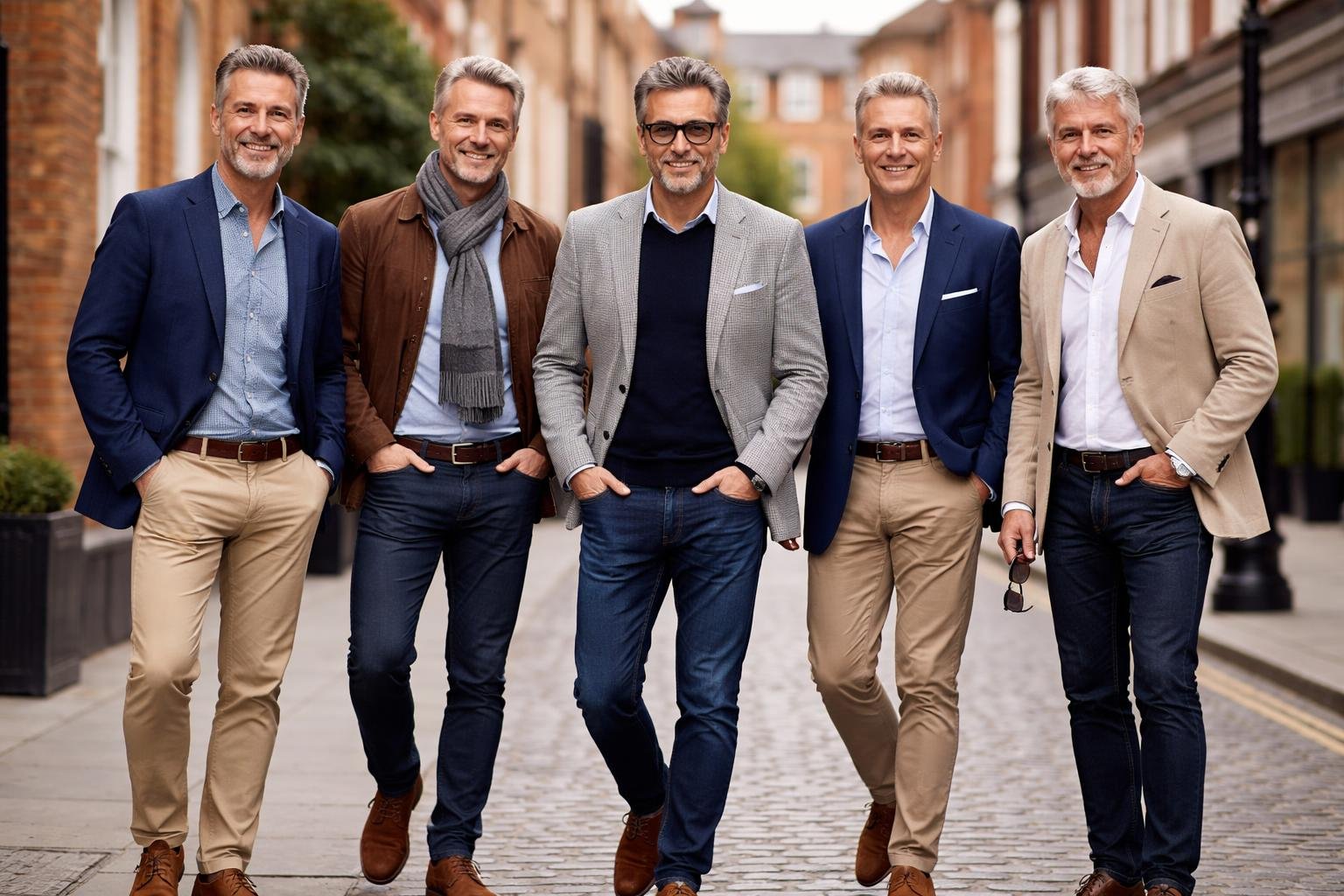
Middle-aged men can build a versatile wardrobe around a few reliable outfit formulas that work for different occasions. These combinations focus on fit, quality fabrics, and pieces that blend traditional menswear with current sensibilities.
Smart Casual Combinations
Smart casual strikes the balance between polished and approachable. A navy blazer paired with a fitted crew-neck t-shirt in grey or white creates a refined base that works for social gatherings or casual dinners. Light chinos in beige or stone provide comfort whilst maintaining a tailored appearance.
Leather loafers in brown or burgundy elevate this ensemble without making it feel overly formal. For cooler months, a cashmere sweater in charcoal or navy can replace the t-shirt, adding warmth and luxury. Dark indigo jeans offer an alternative to chinos, particularly when paired with a light grey blazer.
A simple formula includes a crisp Oxford shirt in white or pale blue, rolled at the sleeves for ease. Add dark trousers and suede desert boots for a look that transitions from daytime errands to evening drinks. A slim leather belt in black or brown keeps everything neat.
Elevated Weekend Looks
Weekend dressing should prioritise comfort without sacrificing style. A quality polo shirt in navy or olive green pairs well with tailored shorts in khaki or grey during warmer months. Boat shoes provide a relaxed finish, particularly for coastal settings or summer gatherings.
For autumn weekends, a soft wool jumper in burgundy or forest green sits well over a white henley. Black denim jeans ground the look, whilst brown Chelsea boots add structure. A tan corduroy jacket brings texture and warmth for outdoor activities.
The key to weekend dressing lies in choosing pieces that feel relaxed but intentional. A plaid flannel shirt over a plain t-shirt works with dark jeans and grey trainers. A lightweight bomber jacket in black or navy adds versatility, working equally well over casual shirts or knitted tops.
Monochrome and Minimalist Ensembles
Monochrome outfits create visual cohesion whilst simplifying wardrobe decisions. A black crew-neck t-shirt paired with black tailored trousers and black leather loafers forms a sleek foundation. This approach works particularly well for fashion for men over 50, as it draws attention to fit rather than competing patterns.
Grey offers similar benefits with added softness. A grey wool blazer over a charcoal v-neck shirt, combined with dark grey trousers, maintains sophistication without harsh contrasts. Navy provides another monochrome option, pairing a navy cardigan with navy chinos and white trainers for contrast.
Minimalist dressing relies on quality basics and proper fit. A white button-down shirt with slim-fit navy trousers creates clean lines. Black oxford shoes complete the look, whilst a simple silver watch adds subtle detail.
Vintage Inspiration with Modern Twists
Vintage pieces bring character when balanced with contemporary fits. A tweed blazer in muted tones pairs with modern slim-cut dark trousers rather than traditional wide-leg styles. A light denim shirt underneath softens the formality whilst brown brogues maintain classic appeal.
A vintage leather bomber jacket from the ’70s works over a fitted white shirt and dark indigo jeans. The key lies in keeping one element vintage whilst ensuring the rest reflects current proportions. Houndstooth blazers gain fresh appeal when worn with black turtlenecks and slim grey trousers.
Corduroy makes a return in more fitted silhouettes. A tan corduroy jacket over a simple crew-neck jumper, paired with black jeans, nods to heritage without appearing dated. Brown leather boots with clean lines complete this blend of old and new.
Footwear and Accessories for Polish
The right footwear and accessories elevate a middle-aged man’s appearance from casual to refined. Quality leather shoes form the foundation, whilst well-chosen ties, pocket squares and outerwear complete the polished look.
Choosing Quality Leather Shoes
Investing in quality leather shoes transforms any outfit. Derby shoes in charcoal or tan work well with both suits and smart casual trousers. These classic styles feature open lacing systems that accommodate wider feet comfortably.
Leather loafers offer versatility for warmer months and less formal occasions. Choose full-grain leather in brown or burgundy shades that develop character over time. Boat shoes suit weekend activities but should remain separate from office wear.
Middle-aged men benefit from shoes with proper arch support and cushioned footbeds. Look for Goodyear welted construction, which allows for resoling and extends the shoe’s lifespan considerably. Rotate pairs seasonally to prevent excessive wear.
Essential maintenance practices:
- Apply waterproof spray to protect leather from British weather
- Store shoes with cedar inserts to control moisture
- Polish regularly to maintain the leather’s appearance
- Resole quality shoes rather than replacing them
Avoid overly trendy designs. Stick with timeless styles in neutral colours that pair with multiple outfits.
Ties, Pocket Squares and Subtle Accessories
Ties and pocket squares add personality without overwhelming an outfit. Silk ties in solid colours or subtle patterns work for professional settings. Navy, burgundy and forest green complement most shirt and suit combinations.
The tie width should match lapel width, typically between 7.5 and 8.5 centimetres for modern proportions. Avoid novelty patterns that appear juvenile. Simple stripes, small dots or textured weaves maintain sophistication.
Pocket squares provide visual interest when folded simply. White linen offers the most versatile option. The pocket square should complement but not exactly match the tie.
Additional accessories to consider:
- Leather belts that match shoe colour
- Simple watches with leather or metal bands
- Cufflinks in silver or gold for formal occasions
- Leather wallets in brown or black
Keep accessories minimal. Two or three well-chosen pieces create polish without appearing overdone.
Selecting the Right Outerwear
Quality outerwear protects against British weather whilst maintaining style. A wool peacoat in navy or charcoal suits formal and casual settings. Ensure the coat sits just above the knee and allows room for layering underneath.
Waxed cotton jackets offer water resistance for countryside outings. Barbour-style coats in olive or tan pair well with jeans and chinos. These jackets require occasional rewaxing to maintain their protective qualities.
For lighter weather, consider a tailored blazer in navy or grey. This versatile piece transitions from office meetings to evening events. Choose natural fibres like wool or cotton that breathe well and resist wrinkling.
Key outerwear features:
- Interior pockets for phone and wallet
- Adjustable cuffs for comfort
- Removable linings for seasonal flexibility
- Quality zips and buttons that withstand regular use
Avoid logos and excessive branding. Clean lines and neutral colours create a timeless appearance that remains appropriate for years.
Dressing for Occasion and Lifestyle
Middle-aged men in the UK need versatile wardrobes that transition smoothly between professional settings, social gatherings, and leisure activities. The right outfit choices demonstrate respect for the occasion whilst maintaining personal style and comfort.
Work-Appropriate Attire
Office environments vary widely, so men should dress according to their workplace culture. Traditional offices still expect classic menswear like navy or charcoal suits paired with crisp white shirts and leather oxfords. Creative industries often allow more flexibility with blazers worn over fine knit jumpers and tailored chinos.
Smart casual workplaces benefit from well-fitted chinos in neutral tones combined with button-down shirts or polo knits. A navy blazer adds polish when meetings require extra formality. Leather loafers in brown or burgundy work well for this dress code and remain comfortable throughout the day.
Fit matters more than brand names in professional settings. Trousers should sit properly at the waist without bunching, and jacket sleeves should end at the wrist bone. Even casual work clothes need proper tailoring to look polished rather than sloppy.
Refined Casual for Social Events
Weekend dinners, pub visits, and informal gatherings call for elevated casual pieces that look intentional. Dark denim or tailored chinos form reliable foundations when paired with quality knitwear or casual shirts. Avoid overly distressed jeans or graphic tees, which can appear juvenile.
Layering adds sophistication to casual outfits. A merino crew neck worn over a collared shirt creates visual interest whilst staying practical for British weather. Suede or leather loafers replace trainers when slightly more polish is needed.
Accessories complete the look without overwhelming it. A decent watch and leather belt suffice for most occasions. Men should ensure clothes are clean and wrinkle-free, as attention to these details separates refined casual from careless dressing.
Travel and Leisure Style Tips
Comfort and practicality matter most for travel and leisure activities. Stretchy chinos or performance fabrics provide freedom of movement without looking sporty. Layering pieces like lightweight quilted jackets or merino cardigans adapt to changing temperatures.
Quality trainers in neutral colours work for walking and casual exploration. Leather loafers serve double duty for nicer restaurants or cultural venues. A structured holdall in leather or canvas carries essentials whilst looking more sophisticated than a rucksack.
Choose fabrics that resist wrinkles and can be worn multiple times between washes. Merino wool regulates temperature and resists odours better than cotton. Dark colours hide minor marks and pair easily with other items in limited luggage space.
Investing Wisely and Maintaining Your Look
Quality pieces and proper maintenance create a wardrobe that lasts for years whilst projecting confidence and polish. Smart spending on key items, combined with consistent grooming habits, allows middle-aged men to look sharp without constantly chasing trends.
When to Splurge on Investment Pieces
A quality leather shoe deserves a significant budget because it will outlast three pairs of cheaper alternatives. Men should look for Goodyear-welted construction and full-grain leather, which can be resoled multiple times. The initial cost seems steep, but the cost per wear drops dramatically over years of use.
A cashmere sweater represents another wise investment for the British climate. These pieces resist pilling when properly cared for and maintain their shape through countless wears. Men should focus on classic colours like navy, charcoal, and camel that work across multiple outfits.
Blazers merit careful consideration and a proper budget. A well-cut navy blazer in quality wool hides figure flaws whilst adding structure to any outfit. The shoulders should fit perfectly without alterations, as this area proves nearly impossible to adjust properly. Men should expect to spend more here than on trendy pieces that will date quickly.
Grooming and Presentation
Daily moisturiser and sunscreen protect skin from premature ageing whilst maintaining a healthy appearance. These simple steps take less than two minutes but make a noticeable difference over time. Men don’t need complicated routines with dozens of products.
Regular haircuts every three to four weeks maintain a polished look that complements good clothing. A style that suits face shape and hair texture works better than following current trends. Men with facial hair should trim it weekly to keep edges clean and defined.
Eyebrows require attention as stray hairs become more noticeable with age. A quick trim with small scissors or a visit to a barber keeps them tidy without appearing overly groomed. Ear and nose hair needs regular checking and removal.
Adapting Style as You Age
Fashion for men over 50 requires subtle adjustments rather than complete wardrobe overhauls. Trousers might need a slightly higher rise for comfort, whilst maintaining a modern slim (not skinny) leg. The fit matters more than following youth-oriented trends.
Navy proves more flattering than black for older skin tones in shirts, blazers, and knitwear. This small colour shift softens the contrast against greying hair and changing complexions. Black still works for formal occasions but shouldn’t dominate everyday wear.
White trainers paired with tailored trousers offer a contemporary casual look that remains age-appropriate. Classic styles like simple leather trainers work better than heavily branded athletic shoes. This combination provides comfort whilst maintaining a put-together appearance for weekend activities.
Leave a Reply